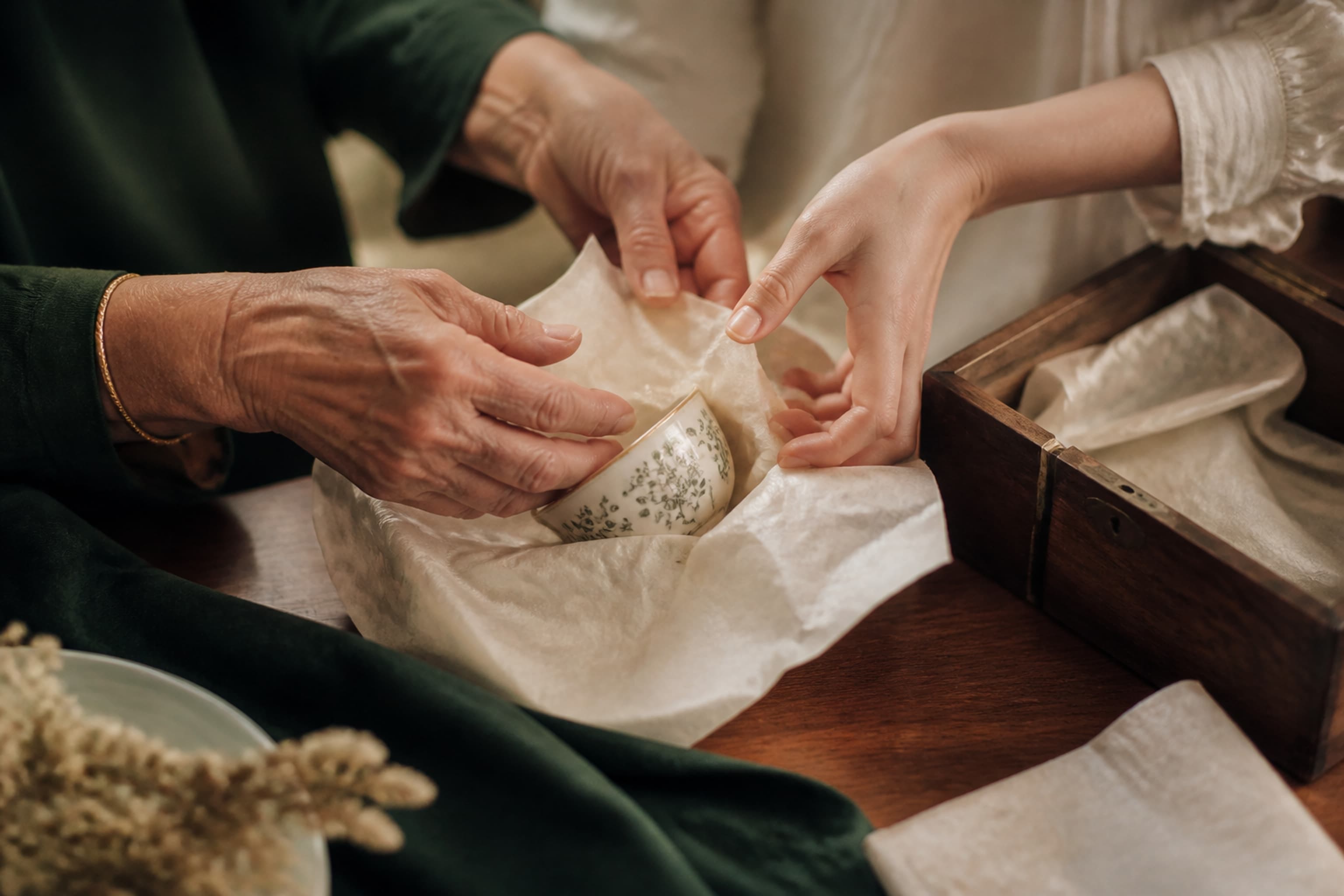
An inherited house full of belongings is one of the most quietly overwhelming responsibilities a person can receive, often arriving in the middle of grief. There is a sensible order to the work. This guide walks through it.
First week: secure and stabilize
Before any sorting, take care of the property itself. Confirm the locks, keep utilities and insurance active, and let the homeowner's insurer know the occupancy has changed; vacant homes often need a policy adjustment.
Walk the house once with a camera and record everything as it stands. This protects family trust later. When someone asks in March where the silver went, the October walkthrough video answers calmly.
Search before you sort
Estates hide important things in unlikely places. Before anything is grouped for donation or disposal, do a deliberate search pass for:
- Wills, deeds, titles, and insurance policies
- Cash, jewelry, and safe deposit keys, including inside books, freezers, and coat pockets
- Photographs and letters, wherever they are
- Anything with a name label or a story attached to it
- Account statements and unpaid bills that the estate must handle
Decide with the whole family, once
The single biggest source of estate conflict is not value, it is process. Someone feels a decision happened without them. Give every heir one organized chance to see what exists and say what matters to them, then record the outcome.
This is exactly why our projects run through a shared family portal: every item, every decision, and every receipt in one place that every sibling can see from any city.
Move things out in the right order
Family items leave first, so nothing meaningful shares a truck with donations. Sale items go second, while the house still shows well. Donations third, grouped and receipted for the estate's records. Disposal is always last, and always the smallest pile when the earlier steps were done with care.
The deadline reality
If the property is headed for sale, work backward from the listing date: cleanout, then repairs, then cleaning, then photos. Each step needs its own week more often than families expect, and access, stairs, and volume can stretch any of them.
A realistic plan built early beats a heroic scramble at the end. That is the entire reason our process starts with the address and a planning range rather than a truck.