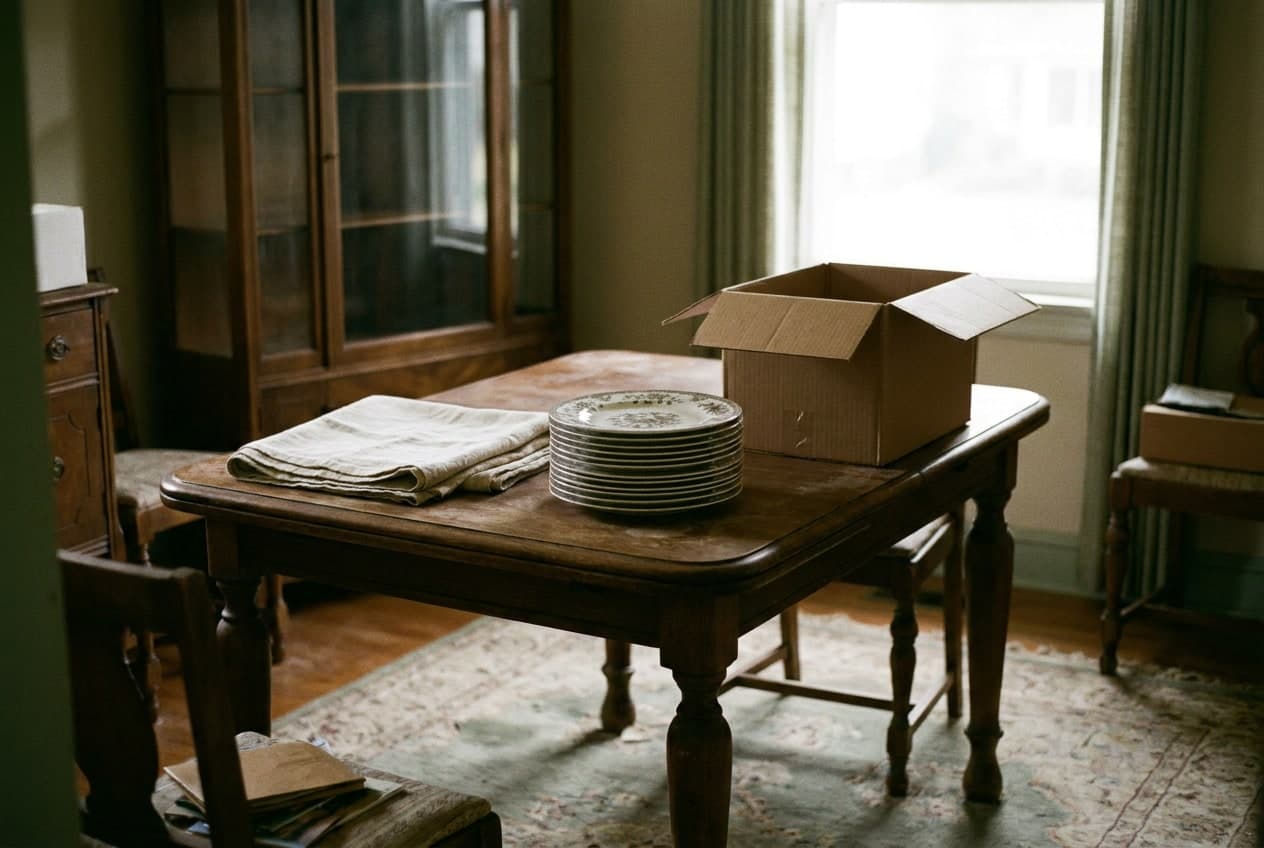
You are standing in a house full of a lifetime of things, and someone has to decide where each of them goes. This guide walks through estate sales, consignment, and donation, explains what each one is good for, and helps you match the right path to the dining room set, the basement shelves, and the closets, based on what your family needs most right now.
Start With What Your Family Needs, Not With the Stuff
Before you look at a single lamp, get honest about the goal. Some families need money from the contents to help cover the mortgage while the house sits on the market. Some need the house empty by a closing date. Some are mostly worried about siblings feeling that Dad's things were treated with respect. Those are three different goals, and they point to three different answers.
Time is usually the deciding factor. An estate sale takes weeks to arrange and run. Consignment can take months to pay out. Donation can empty a room this Saturday. If you live in Charlotte or Phoenix and have one more trip to Pittsburgh in you, that reality should shape the plan more than any guess about what the china might be worth.
Write the goal on a piece of paper and tape it to the refrigerator. When you find yourself stuck on the fourth box of Christmas decorations, look up and remember which thing you said mattered most.
When an Estate Sale Makes Sense
An estate sale works when the house has enough good, sellable things to draw a crowd and cover the sale company's time. Think a full house of solid wood furniture, tools that still work, kitchenware, decent artwork, jewelry, a garage of yard equipment. The company prices everything, staffs the sale for a couple of days, takes a percentage of what sells, and often offers to haul away what is left for an added fee.
It does not work as well when the good pieces are few and the rest is worn. A house with two nice pieces and a lot of tired particleboard will not draw buyers, and most companies will politely decline. It also struggles in homes with tight, steep streets and no parking, which describes a lot of older neighborhoods around Pittsburgh and the river towns, and in the middle of a January cold snap when nobody wants to browse a chilly basement.
One more honest note. An estate sale leaves you with a check and a house that is still not empty. Somebody has to deal with the unsold third, the drawers of paperwork, and the cleaning. Build that into the plan from the start so it does not surprise you the Monday after.
Consignment: For the Few Pieces Worth the Wait
Consignment is the right path for a small number of items with real resale value: a quality mid-century dresser, a good painting, fine jewelry, a designer handbag, a collection with a known market. A shop displays it, sells it over time, keeps a share, and mails you the rest.
The tradeoff is patience. Furniture can sit for months before it sells or comes back to you unsold. You are also responsible for getting it there, which means a truck and two strong backs for that mahogany sideboard. Some antique dealers will come to the house and make a straight offer instead, which is faster and often the better choice if the goal is a clean house rather than the top price.
Be prepared for a humbling conversation about brown furniture and formal china. Large dark dining sets, curio cabinets, and full sets of fine china are hard to sell right now no matter how well they were cared for. That is a market fact, not a judgment on your mother's taste. Knowing it ahead of time saves a lot of driving around with a car full of rejected plates.
Donation: The Fastest Path to an Empty Room
Donation is the workhorse of every cleanout. Charity thrift shops, furniture banks, refugee resettlement programs, and church closets will take clothing in good condition, kitchen goods, small furniture, books, linens, and working household items. Many will schedule a pickup for larger pieces, though pickup calendars fill up and the truck may not come for a week or two.
Know the common refusals before you load the car. Most organizations will not take mattresses, box springs, particleboard furniture that has been assembled, upholstered pieces with rips or stains, cribs, older televisions, or anything with a recall risk like car seats. Sort with those rules in mind so you are not turned away at the dock.
Ask for a receipt every time. Whether a donation helps on the estate's taxes or your own is a question for your tax preparer or the estate's attorney, and this guide cannot answer it for you. What you can do is keep a simple list of what went where, with dates, in one folder. Executors especially will thank themselves later for that folder.
A Decision Guide by Item Type
Most homes end up using all three paths. Here is how the usual categories tend to sort out, with the reason behind each.
Treat these as starting points, not rules. A particular family's tools or quilts may hold a market you would not expect, and a quick search of recent sold listings will tell you more than a guess.
- Solid wood furniture in good shape: estate sale if there is enough of it, dealer offer or consignment for a standout piece, donation to a furniture bank if speed matters.
- Formal china, crystal, and silver plate: estate sale or donation. Sterling silver is the exception and worth a dealer appraisal.
- Costume jewelry: estate sale. Fine jewelry: a jeweler's appraisal first, then consignment or private sale.
- Books: donation to a library sale or thrift shop. Rare or signed editions to a used bookseller.
- Clothing and linens: donation, sorted for condition. Vintage pieces from the closets of the sixties and seventies can consign.
- Tools, lawn equipment, and workshop contents: estate sale. These draw local buyers reliably. Half-used supplies go to a materials reuse center.
- Small appliances and kitchenware: estate sale if one is planned, otherwise donation.
- Photos, letters, military records, and family documents: none of the above. These stay with the family and get scanned or divided.
- Collections such as trains, coins, stamps, or records: a specialty dealer before anything else, because a general estate sale often underprices them.
What None of Them Will Take
Every Western Pennsylvania basement has the same shelf: half-empty paint cans, old stains, a can of driveway sealer, weed killer, and a coffee tin of loose screws. Nobody will buy or accept these. Paint, chemicals, and old electronics go to county household hazardous waste collection events, which run on a schedule and fill up, so check your county's dates early.
Mattresses, broken furniture, water-damaged boxes from the back corner, and the ancient chest freezer in the garage will need a junk hauler or a dumpster. Old file cabinets of paperwork should be shredded rather than tossed, because tax returns and account statements are exactly what identity thieves hope to find at the curb.
Plan for this pile from day one. It is almost always larger than families expect, it is the heaviest work, and it usually involves carrying things up a narrow basement stairway built for a smaller century.
Putting Estate Sale, Consignment, and Donation Together
A realistic sequence looks like this. First, the family walks through and pulls out what stays in the family, with decisions written down. Second, anything with real value gets a look from a dealer or appraiser. Third, you decide whether the remaining volume justifies an estate sale or whether donation and removal will get you there faster. Fourth, the hazardous shelf and the broken pile get scheduled for proper disposal. Last comes the deep cleaning and the walk through an empty house.
Each of those steps is doable on its own. Together, spread across weekends and long drives, they are a lot to carry for a family that is also grieving or managing a parent's care from a distance. If you would rather hand the whole sequence to one person, from the first sorting session through the donation receipts to the last broom, that is exactly what Homeward Guide Co. does for families in the Pittsburgh area, Cranberry, Butler, and Beaver County. You can reach the owner directly at (724) 201-9992 or through homewardguideco.com.
Whichever way you go, the goal is the same. The good things find people who will use them, the family keeps what holds the memories, and the house is ready for what comes next. You do not have to get every single decision perfect. You just have to keep moving through the rooms, one shelf at a time.
Common questions
- Is it better to have an estate sale or donate everything?
- It depends on how much sellable material the house holds and how fast you need it empty. A full house of quality furniture and tools favors an estate sale. A modest home with mostly everyday belongings, or a tight deadline, favors donation and removal.
- How much do estate sale companies take?
- They keep a share of the sale proceeds, and the exact percentage varies by company and by how much work the house requires. Ask for the split, any minimums, and what happens to unsold items in writing before you sign. Get two or three companies to walk through and compare.
- What will donation centers not accept from an estate?
- Most refuse mattresses, assembled particleboard furniture, torn or stained upholstery, older televisions, cribs, and open chemicals or paint. Policies differ, so call ahead with a short list before loading the car. Those refused items need a hauler or a county disposal event.
- Can I do consignment and an estate sale at the same time?
- Yes, and many families do. Pull the few standout pieces for a dealer or consignment shop first, then let the estate sale company handle the general contents. Just tell the sale company up front what has been removed so their estimate is accurate.