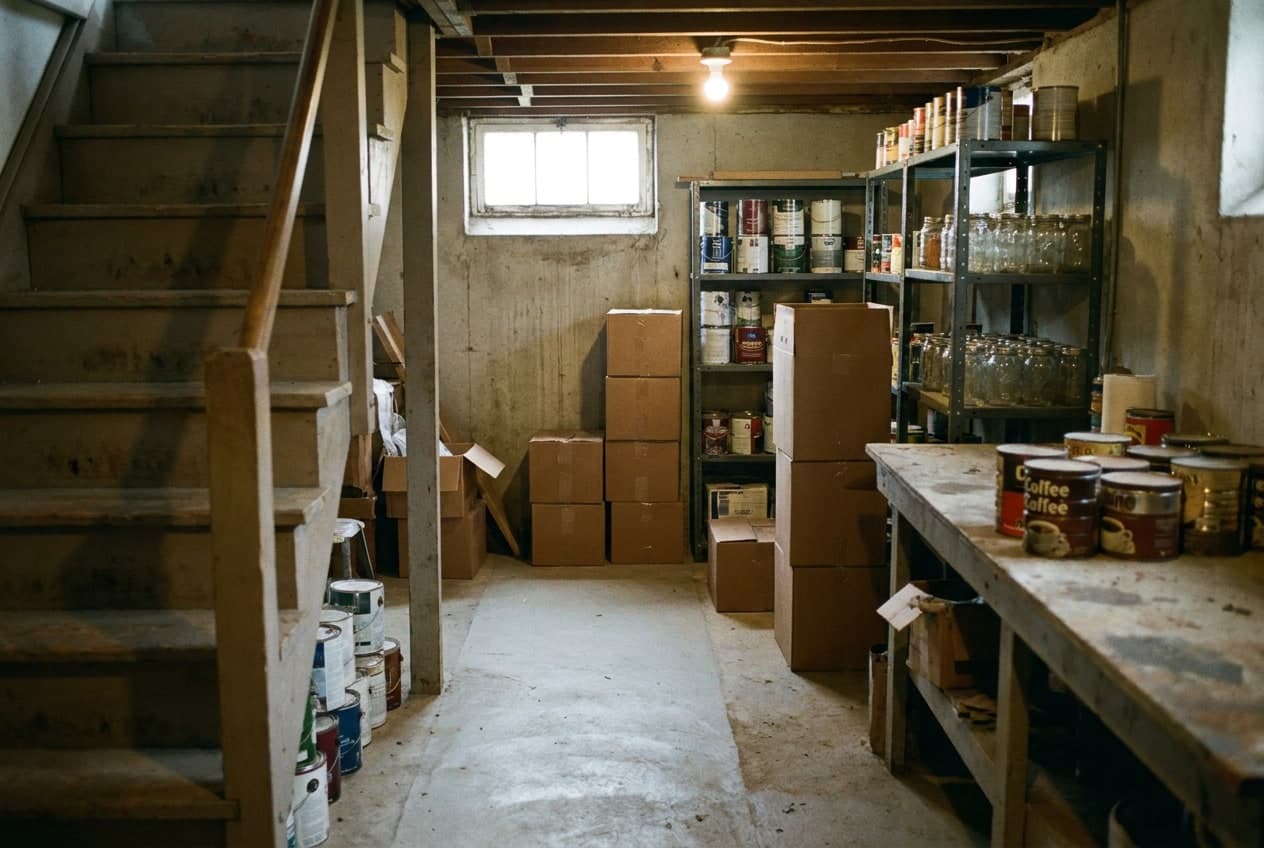
You have opened the basement door, looked down the stairs at forty years of boxes, shelves, furniture, and paint cans, and closed it again. This guide gives you a working order for clearing a full basement or attic in an older Pennsylvania house, the safety issues nobody warns you about, and an honest picture of how long it takes and where the stuff actually goes.
Why a Full Basement Is the Hardest Room in the House
Most of the houses around Pittsburgh, Butler, and Beaver County were built with real basements, and real basements collect things. The rule in a lot of families was simple. If it might be useful someday, it went downstairs. Forty years later there are three generations of Christmas decorations, a workbench buried under coffee cans full of screws, a chest freezer that has not run since the nineties, and a wall of shelving holding canning jars, paint, and boxes labeled in handwriting nobody can read anymore.
The basement is also physically the worst place to work. The stairs are steep and often narrow, sometimes with a turn at the bottom. The ceiling is low. The light is one bulb on a pull chain. The floor may be damp along the walls where the foundation sweats every spring. Everything you find has to be carried up those stairs one armload at a time, which is why a basement takes far longer than a bedroom of the same size.
None of this means you cannot do it. It means you should plan for it like a project, not an afternoon. Treat it as a series of sessions, each with a clear finish line, and you will get to the bottom of the pile.
Before You Carry Anything Up: Basement Cleanout Safety
Spend the first hour making the space safe to work in. It feels like a delay. It saves you a fall, a trip to urgent care, or a lungful of something you did not want to breathe.
Start with light and footing. Bring a couple of clamp lights or a battery work light and aim them at the stairs and the main path. Press on every stair tread before you trust it with a load. If the handrail wobbles, tighten it or tell everyone to keep one hand on the wall. Clear a path from the bottom of the stairs into the room before you touch a single box, even if that means stacking things temporarily against a wall.
Then look for the things that hurt you slowly. Cardboard that has sat on a damp floor for years often has mold on the underside and mouse droppings inside. Wear disposable gloves and a snug dust mask when you open old boxes, and work with the outside door or a window open if you can. If you find heavy black growth on walls or joists, or the smell knocks you back when you open the door, stop and have someone qualified look at it before you spend a weekend down there.
Old chemicals deserve their own caution. Basements hold decades of paint, thinner, pool chemicals, pesticides, gas cans from a long-gone mower, and unlabeled jars of who knows what. Do not pour any of it down the drain or mix containers. Set it all in one spot for the hazardous waste run described below.
- Two or more good lights, including one aimed down the stairs
- Disposable gloves, dust masks, and closed toe shoes for everyone
- A phone in your pocket, not left upstairs, in case someone falls
- Heavy contractor bags, a marker, and boxes small enough to carry up stairs when full
- A hand truck or dolly if there is a walk-out door; without one, plan on more people and more trips
The Order That Works: Clear a Path, Then Work Zone by Zone
Do not start with the box that looks most interesting. Start at the bottom of the stairs and work outward, so every trip up gets easier instead of harder. The goal of the first session is simply a clear lane from the stairs to the outside door or the far wall, plus one open patch of floor where you can set up sorting piles.
After that, divide the basement into zones you can name out loud. The workbench. The shelves under the stairs. The laundry corner. The furniture pile by the furnace. Finish one zone completely before moving to the next, and you will see real progress instead of a room that looks just as full at the end of the day.
Within each zone, work from big to small. Move or decide on the large pieces first, since they are what makes the space feel impossible. The old couch, the dead freezer, the exercise bike, the dresser with the missing drawer. Once those are tagged for removal and pushed toward the exit, the boxes behind them become a manageable job.
Keep the sorting rules dead simple. Four piles: keep, give to family, donate, and go. Anything that needs a decision from a sibling goes in a fifth spot with a photo texted that day and a deadline for an answer. Open boxes are decided in the moment, not carried upstairs to think about later. Later is how the basement got full.
What You Will Actually Find and What to Do With Each Kind
Forty years in a basement produces the same categories in nearly every house. Knowing what is coming lets you decide the rules once instead of agonizing over every box.
Paper is the biggest surprise. Old tax files, bank statements, greeting cards, school papers, and manuals for appliances that were replaced twice. Pull out anything that looks like a deed, title, insurance policy, will, or account statement from the last several years and put it in a single bin to go upstairs. Everything else that has a name or number on it goes in a shred pile. Plain old magazines and newspapers can go straight to recycling.
Tools and hardware are usually worth a second look. A solid workbench vise, decent hand tools, and a working table saw will donate well or please a grandchild. The coffee cans of mixed screws, rusted blades, and dead power tools can go. Do not spend an evening sorting screws.
Holiday decorations, canning supplies, and kitchen overflow tend to be duplicates of things the family already has. Pick the few pieces with real history, such as the hand painted ornaments or the good pressure canner, and let the rest go to donation. Old furniture in a damp basement often has a musty smell or water damage on the legs, and most donation centers will not take it. Be honest about which pieces are truly still furniture.
- Photos, letters, and anything with handwriting: box it and bring it upstairs to sort in good light, never in the basement
- Documents: one bin for anything legal or financial, shred pile for the rest with personal information
- Paint, chemicals, propane, old gas: hazardous waste, set aside separately
- Electronics and old TVs: most Pennsylvania trash haulers will not take them, so plan a recycling drop
- Freezers, dehumidifiers, and window units: check with your hauler about appliance pickup rules
Getting Rid of Basement Stuff: Trash, Donation, and Hazardous Waste
Where the stuff goes decides whether the project ends in one weekend or drags through the whole spring. Plan the exits before you fill the first bag.
For ordinary trash, a full basement is nearly always more than the curb can absorb. A rented dumpster in the driveway is the simplest answer when there is room for one, and a junk removal crew is the answer when there is not or when there is nobody young enough to carry a sleeper sofa up the stairs. Either way, book it before you start, so there is a place for things to go the same day they come up.
Donations move best in a few big loads rather than one carload at a time. Stage donatable items in the garage or on the porch, and ask the charity whether they pick up. Many will for furniture and larger loads, and it saves you a dozen trips. Keep the receipts together in one envelope.
Hazardous waste follows its own rules. Every county in the region runs household hazardous waste collection, but the schedule and the list of accepted items vary and change from year to year. Check your county's website or call the county office before you load the car. Old paint that has fully dried out in the can is often treated differently than liquid paint, so ask rather than guess. The same goes for propane tanks, fire extinguishers, and anything with a battery.
How Long It Takes to Clean Out a Basement and How to Pace It
An honest estimate for a truly full basement in an older house, cleared by family working weekends, is several full weekends, not one. Add time if the family lives out of town and is doing this on trips home, if there is no walk-out door, or if every box has to be opened because papers and photos are mixed in with the hardware.
Pace it so nobody gets hurt on the last trip of the day. Basements are cold, the work is all lifting and stairs, and the injuries happen when people are tired. Work in blocks of a few hours with a real break in between. Set the stopping point before you start. Finish the workbench zone today, not finish the basement today.
Bring more people than you think you need for the heavy sessions and fewer for the sorting sessions. A crowd is wonderful for carrying up furniture and useless for deciding whether to keep Dad's letters. Match the crew to the day.
Photograph the room before you start and at the end of each session. On the days when it feels like nothing changed, the pictures will tell you otherwise.
The Last Step: A Broom Clean Basement and What Comes After
The finish line is a basement you can walk across with the lights on and see the walls. Sweep the floor, wipe down the shelving that stays, run a dehumidifier for a few days with the door open, and take a good look at the foundation walls and the area around the water heater now that you can finally see them. This is when families discover the slow leak or the cracked window that has been hidden behind boxes since the first Bush administration.
If the house is going to be sold, that clear basement matters more than most people expect. Buyers and inspectors go straight downstairs, and a dry, empty, swept basement in an older house tells them the place has been cared for. If a parent is staying, the same clear basement means fewer trips up and down dangerous stairs and a real place to put the things they actually use.
If you are reading this from three states away, or you have looked at the stairs and your own knees and done the math, you do not have to be the one carrying it up. Homeward Guide Co. coordinates the whole basement, from the first sorting session through the dumpster, the donation runs, the hazardous waste trip, and the final sweep, through one person you can call at (724) 201-9992. Whether you do it yourselves or hand it off, the order above is the same, and the basement does get empty.
Common questions
- Where do I start cleaning out a basement full of stuff?
- Start at the bottom of the stairs and clear a walking path to the far wall or the outside door before you sort anything. Then divide the basement into named zones and finish one zone at a time, moving the large pieces first. Decide each box the moment you open it rather than carrying it upstairs to think about later.
- How do I get rid of old paint and chemicals from a basement?
- Set every can, jar, and tank aside in one spot and do not pour anything down a drain. Each county in Western Pennsylvania runs household hazardous waste collection, but the dates and accepted items change, so check the county website or call before you load the car. Fully dried latex paint is often handled differently than liquid paint, so ask rather than assume.
- Is it safe to clean out a damp basement with old boxes?
- Usually yes, with gloves, a dust mask, good light, and a window or door open. Old cardboard on a damp floor commonly hides mold and mouse droppings, so handle it as if it does. If you see large areas of dark growth on walls or joists, or the smell is overwhelming, stop and have someone qualified assess it first.
- How long does it take to clean out a full basement?
- For a truly full basement in an older house, plan on several full weekends of family work, not one. It takes longer when there is no walk-out door, when family is traveling in from out of town, or when papers and photos are mixed into every box. A hired crew with a dumpster can do the heavy removal in a day or two once the sorting decisions are made.
- Will donation centers take furniture from a basement?
- Sometimes, but musty or water damaged pieces are usually refused, so be honest about what is truly still furniture. Solid tools, working small appliances, holiday decorations, and clean household goods donate well. Call ahead and ask about pickup for larger loads, since many charities will come to the house.