In this guide7 sections
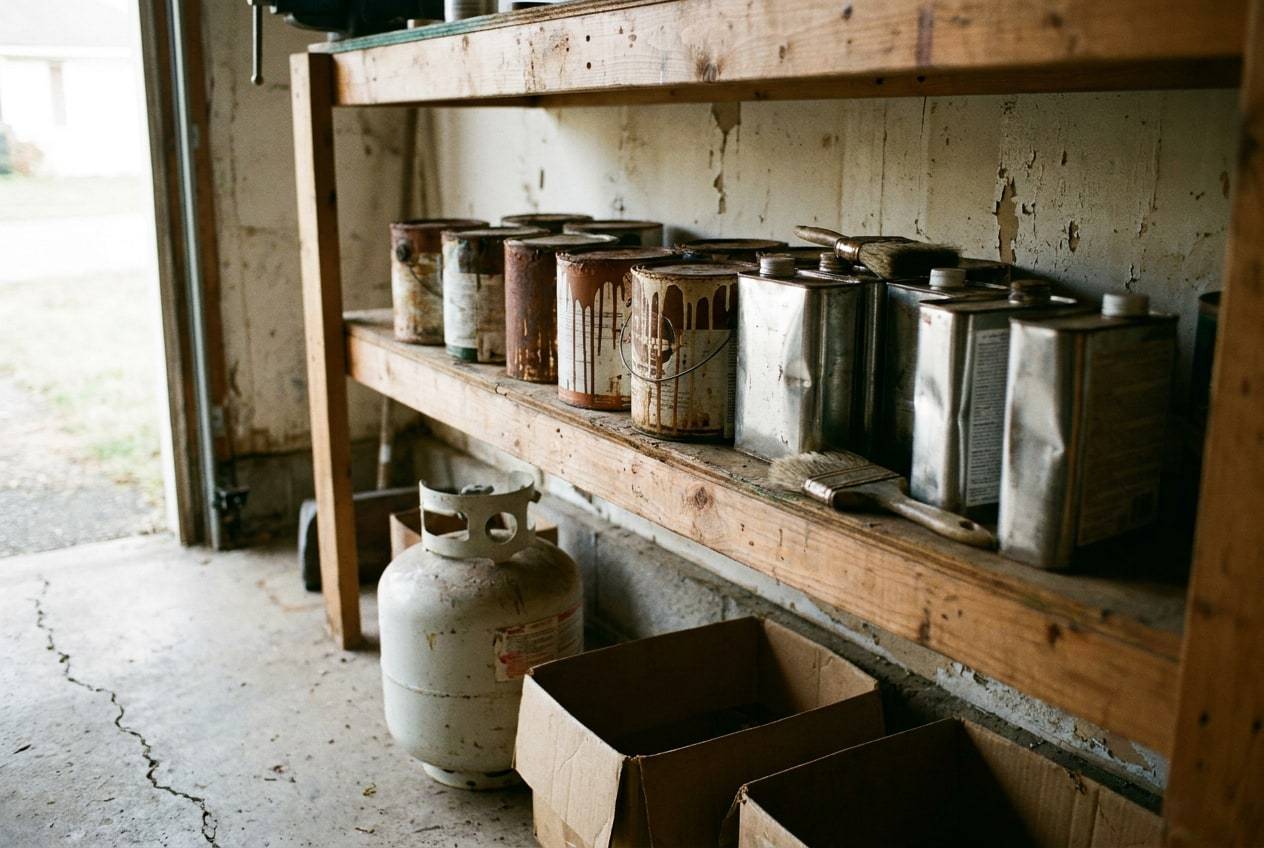
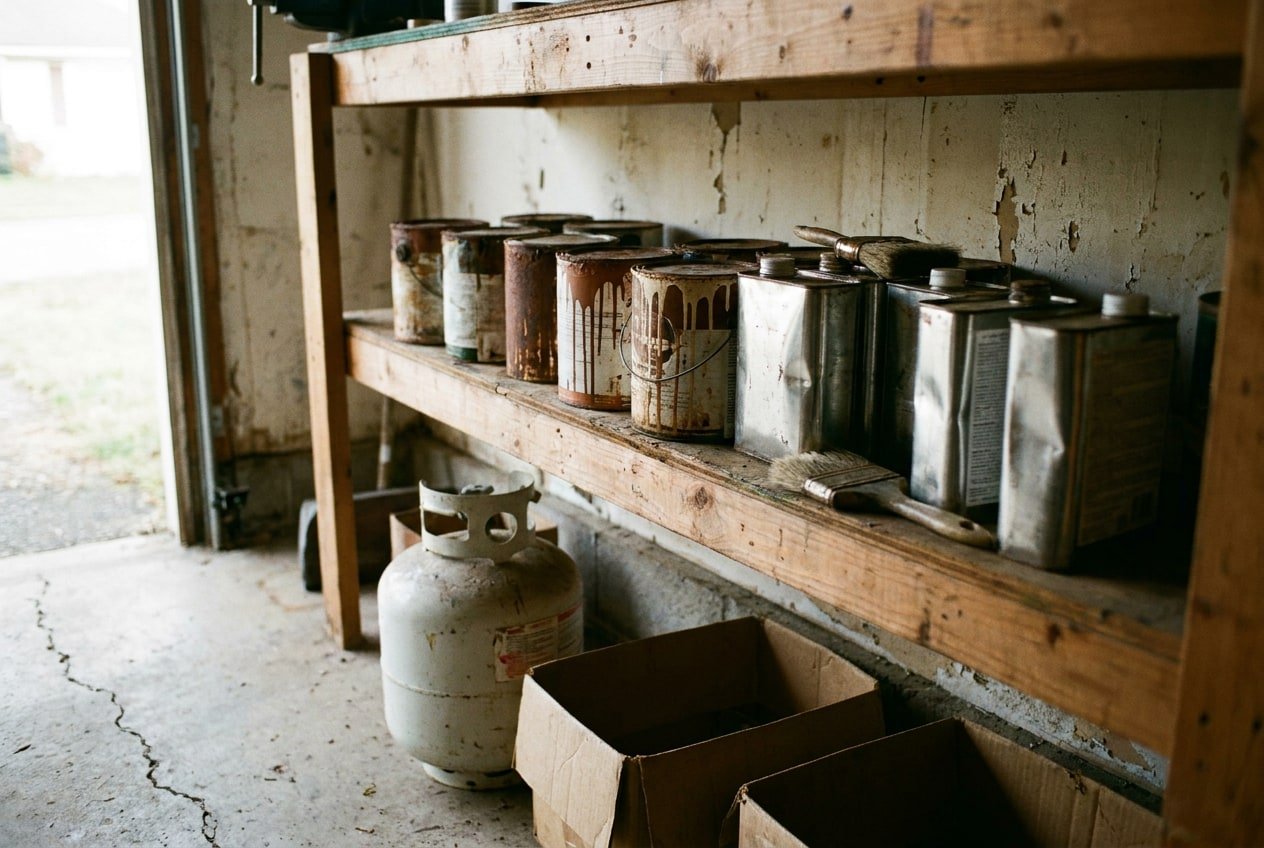
You opened the garage or the back corner of the basement and found forty years of paint cans, a shelf of solvents, two propane tanks, and a few bottles nobody can identify. The junk hauler already told you they won't touch any of it. This guide walks through what each of those things is, what you can safely do with it yourself, and where the rest legally goes in Allegheny County and the surrounding counties.
Why the Hauler Said No to the Paint and Chemicals
Most junk removal companies and most municipal trash services will not take liquid paint, solvents, fuel, pesticides, pool chemicals, or pressurized tanks. This is not them being difficult. These materials are classified as household hazardous waste, and landfills in Pennsylvania are not permitted to accept them in liquid or pressurized form. A hauler who loads them anyway risks a fine at the transfer station and a fire in the truck.
That leaves the family holding the problem, usually on a tight timeline, usually right before a sale or a lease signing. The good news is that nearly everything on that shelf has a legal, free or low-effort place to go. The trick is sorting it into the right piles first, because a can of dried latex paint and a can of oil-based stain look identical from across the room but go to completely different places.
One more reason to take this seriously: the house itself. Older Western Pennsylvania homes have damp basements and tight garages. Leaking solvent cans, rusted gasoline containers, and corroded pool chlorine buckets are a real fire and air quality hazard in a closed space. Getting them out is a safety job, not just a tidying job.
Start With a Walkthrough and Four Piles
Open the garage door or basement windows before you start. Wear nitrile gloves and old clothes. Then move everything chemical off the shelves and onto a tarp or old sheet where you can see it in daylight. Do not open containers to sniff them, and do not pour anything together. Mixing unknown chemicals is how people end up with a cloud of chlorine gas in a basement with one small window.
Sort into four piles. Keep containers upright, keep lids on, and set anything leaking inside a plastic bin or a cut-down milk jug to catch drips.
- Latex paint: water-based wall paint, primer, and most craft paint. The label says latex, acrylic, or water cleanup.
- Oil-based products: alkyd paint, stains, varnish, polyurethane, paint thinner, mineral spirits, turpentine, lacquer, and anything that says clean up with solvent.
- Fuels, pressurized, and automotive: gasoline, kerosene, propane tanks, camp fuel canisters, aerosol cans with product still inside, motor oil, antifreeze, car batteries, brake fluid.
- Everything else hazardous: pesticides, herbicides, rodent bait, pool chemicals, drain cleaner, muriatic acid, old fertilizer, mercury thermometers, fluorescent tubes, and any unlabeled container you cannot identify.
Latex Paint Can Usually Go in the Regular Trash Once It Is Dry
This is the pile that shrinks the fastest. Dried latex paint is not hazardous waste, and most municipalities in Allegheny, Butler, and Beaver counties allow it in the regular trash once it is solid. Confirm with your own borough or township, because a few trash contracts have their own rules about lids and container size.
Drying it is simple but takes a little patience. For a can that is nearly empty, pry the lid off and let it sit open in the garage for a few days. For a can with more than an inch or two of paint, stir in kitty litter, sawdust, or shredded paper until it is the texture of thick oatmeal, then leave the lid off until it is firm all the way through. A hardware store paint hardener does the same job faster. In a damp basement this can take most of a week, so start early.
Once the paint is solid, put the can in the trash with the lid off so the collector can see it is dry. If you have a dozen cans or more, spread them across a couple of pickup weeks rather than piling them all out at once. Some haulers will also take fully dried latex cans in a general junk load, so ask before you assume.
Oil-Based Paint, Solvents, and Stains Go to a Household Hazardous Waste Collection
Oil-based paint, varnish, thinner, and mineral spirits cannot be dried out and tossed, and they must never go down a drain. Pittsburgh and many of the older boroughs around it have combined sewer systems, so what goes down a basement floor drain or a street storm drain can end up in a creek or the river. Pouring solvent on the gravel behind the garage is just as bad and is illegal besides.
The right destination is a household hazardous waste collection. Allegheny County and the counties around it host these several times a year, typically in warmer months, at a parking lot or public works site. Most require advance registration, most have a limit on how much one vehicle can bring, and most charge a modest fee by volume. Dates and rules change year to year, so search your county's name plus household hazardous waste, or call the county recycling office and ask for the current schedule.
Plan for the appointment. Pack containers upright in cardboard boxes or plastic bins in the trunk, not the back seat, with newspaper between them so they cannot tip. Keep the car windows cracked on the drive. If the next collection is months away and the house closes sooner, ask the county office about year-round drop-off options or licensed hazardous waste contractors, and ask your real estate agent whether the buyer will accept a short list of items left behind with disclosure. Usually they will not, so the earlier you register for an event, the better.
Propane Tanks, Gasoline, and Other Garage Hazards
Propane tanks are the item that trips up the most families, because they are heavy, nobody knows whether they are empty, and no trash service will take them. The simplest route for a standard grill tank is a propane exchange cage at a hardware or home improvement store. You can often leave an old tank, even a dented one, and walk away without buying a new one, though policies vary by store, so ask at the counter. Small green camp canisters generally need to go to a hazardous waste collection or a scrap metal yard that accepts them.
Gasoline that has sat for years in a red can has usually turned to varnish and will not run a mower. It goes to a hazardous waste collection, not the trash and not the lawn. Kerosene is the same. Used motor oil and antifreeze are easier: many auto parts stores accept used motor oil free of charge, and some take antifreeze and car batteries as well. Call first and bring it in a sealed container.
Aerosol cans with product still inside, old fire extinguishers, and anything under pressure should go to the hazardous waste collection or a fire equipment company. Truly empty aerosol cans can go in the regular trash in most places. Pool chemicals, muriatic acid, and drain cleaner are among the most dangerous items in the whole garage because they react violently with each other. Keep them far apart in the car and tell the staff at the collection what you have.
Unlabeled containers deserve respect. If you cannot read the label and cannot tell from the shape of the bottle what it is, treat it as hazardous and bring it to the collection. The staff there deal with mystery jars every week.
What to Do Before the House Closes if Time Is Short
A full garage cleanout and a hazardous waste appointment can run on different clocks. The junk hauler can come Thursday; the county collection may not be for six weeks. Families clearing an estate from out of town often cannot make two trips. Here is how to handle that gap.
First, do the dry-out on the latex paint immediately, because it costs nothing and clears the biggest pile. Second, register for the earliest county collection you can find in any of the surrounding counties, since some accept residents from neighboring counties and some do not, which the registration page will say. Third, consolidate the remaining hazardous items into sealed bins in one corner of the garage, away from the furnace and water heater, with a clear label on the bin lid. Fourth, if the closing is truly immediate, ask the county recycling office for a list of licensed hazardous waste contractors who will pick up from a residence. It is not cheap, but it is legal and it is fast.
Whatever you do, do not leave the chemicals for the buyer without saying so. Pennsylvania's seller disclosure rules and your sales agreement likely address items left on the property. Confirm with your real estate agent or attorney before leaving anything behind.
You Do Not Have to Be the One Driving the Van of Paint Cans
All of this is doable by a family on a few weekends. It is also the part of a cleanout that most people underestimate, because it cannot be solved by renting a dumpster and it demands trips to three or four different places on a schedule the county sets, not you. If you live two states away or you are handling this alongside a parent's care, it can quietly become the thing that holds up the whole house.
This is exactly the kind of job Homeward Guide Co. takes off a family's plate. One person sorts the garage and basement, dries out what can be dried, routes the solvents and propane and pesticides to the correct county collection or licensed contractor, and gives you a short written record of where everything went. It fits inside a larger estate clearout or a sale preparation, so the hazardous shelf is handled in the same stretch of days as the furniture, the donations, and the final cleaning.
If you would rather hand it all to one point of contact and stop carrying it, call (724) 201-9992 or visit homewardguideco.com. And if you would rather do it yourself, the piles above and a call to the county recycling office will get you there.
Common questions
- Can I throw away old paint cans in Pittsburgh?
- Dried latex paint can usually go in regular trash in Pittsburgh and most surrounding municipalities, with the lid off so the collector can see it is solid. Oil-based paint, stains, and solvents cannot go in the trash at all and should be taken to a county household hazardous waste collection. Check your own borough or township's trash rules to be sure.
- Where do I take old paint thinner and solvents in Allegheny County?
- Liquid solvents like paint thinner, mineral spirits, and turpentine go to a household hazardous waste collection event run by the county or a neighboring county. These are usually held in warmer months, require registration, and charge a modest fee. Search your county's name plus household hazardous waste for the current schedule.
- How do I get rid of an old propane tank?
- Take a standard grill tank to a propane exchange cage at a hardware or home improvement store and ask whether they accept old tanks without a purchase, which many do. Small camp canisters generally need a hazardous waste collection or a scrap yard that takes them. Never put a propane tank in household trash or a dumpster.
- Will a junk removal company take chemicals and paint?
- Almost none will take liquid paint, solvents, fuel, pesticides, or pressurized tanks, because landfills will not accept them. Many will take fully dried latex paint cans and empty aerosol cans in a general load. Ask before booking so you are not left with a shelf of items after the truck leaves.
- What should I do with unlabeled bottles of chemicals in a basement?
- Treat them as hazardous. Do not open, sniff, or mix them, and do not pour them down a drain. Set them upright in a plastic bin and bring them to a county hazardous waste collection, where staff are used to identifying mystery containers.