In this guide7 sections
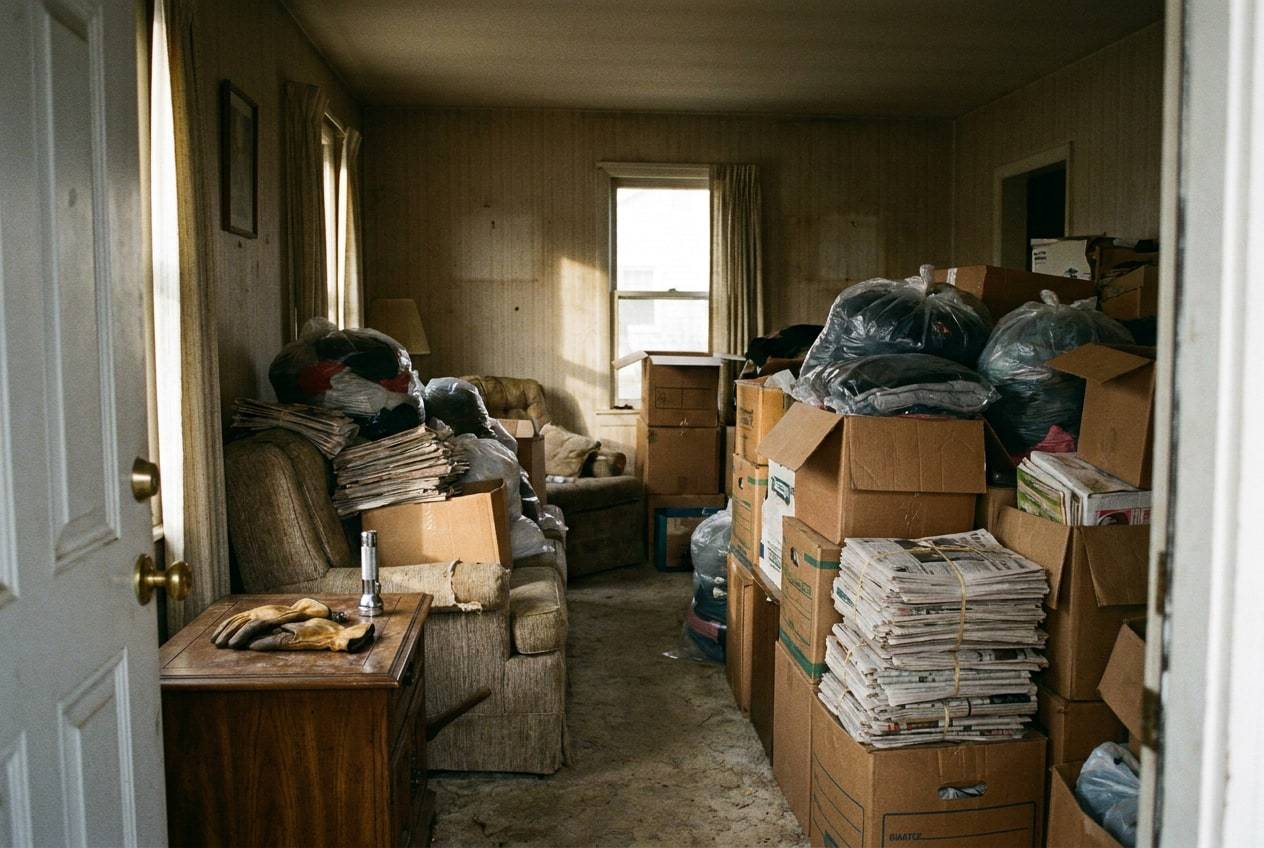
You have the keys to a house that is full to the doorways, and somewhere under all of it is a property that needs to be sold. This guide walks you through the order that works: making the place safe, pulling out what matters, clearing, cleaning, deciding which repairs are worth it, and knowing when to stop and sell it the way it sits.
Start with safety before you move a single box
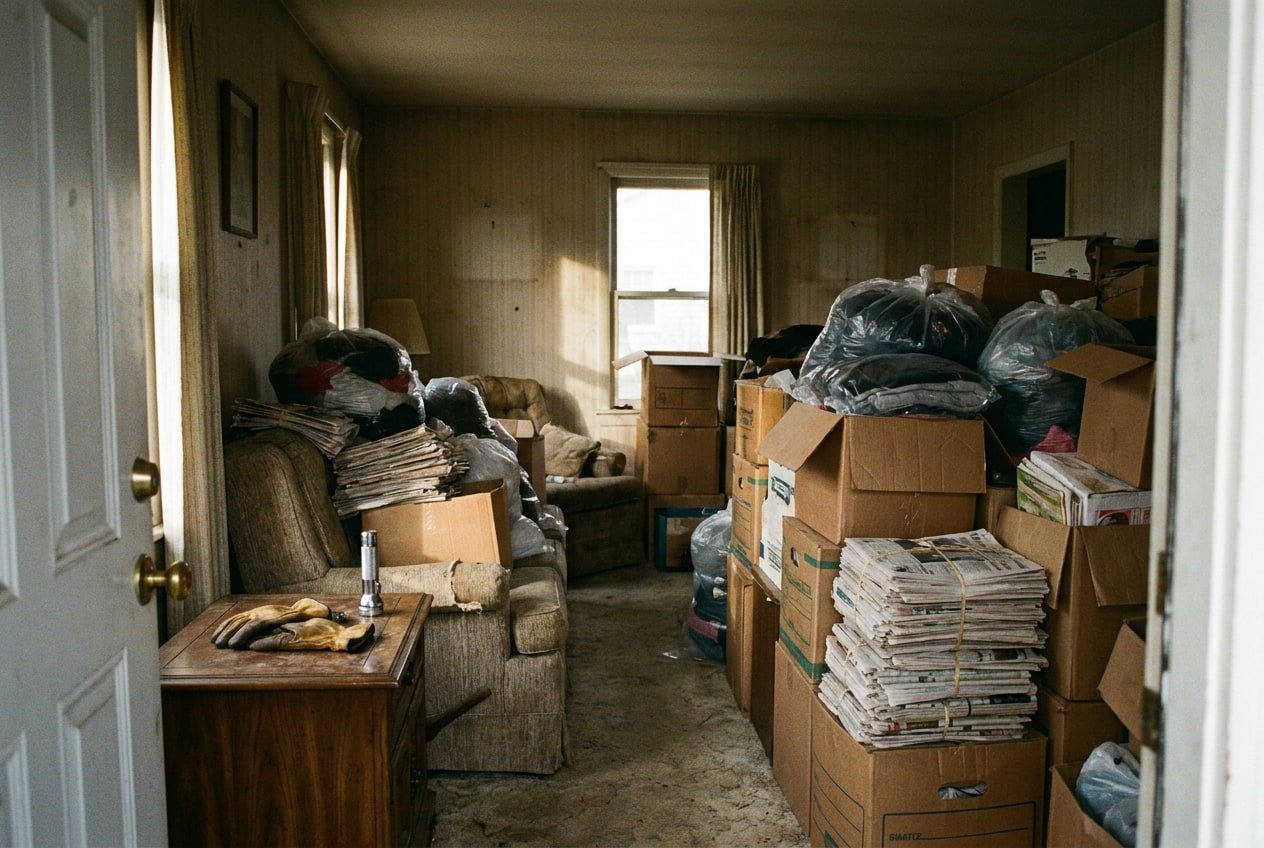
A hoarded house is not just a messy house. Paths are narrow, floors may be soft where water sat under piles for years, and you often cannot see the outlets, the furnace, or the stairs. Before anyone starts carrying things out, spend the first visit just looking and taking notes.
Walk the main path with a flashlight even in daytime. Look up for sagging ceilings and down for stains that spread out from under stacks. Find the electrical panel and shut off anything that looks overloaded. In older Western Pennsylvania homes, the basement is where trouble hides: a sump pump buried under boxes, a gas water heater with cardboard leaning against it, a stone foundation that has been quietly weeping for a decade.
If you see rodent droppings in quantity, mold that covers more than a small patch, or any sign that animals lived or died in the house, stop and bring in someone who does this for a living. Those conditions call for masks, gloves, and ventilation you probably do not have in the trunk of your car. Your lungs and your back are not worth the money you would save.
- Wear closed shoes with thick soles, work gloves, and a fitted mask on every visit.
- Open windows and run fans before you start pulling things apart.
- Keep a phone charged and let someone know you are inside and when you expect to be out.
- Photograph every room before touching anything, both for insurance and for family questions later.
- Locate the water shutoff and the gas shutoff so you can reach them fast.
Find and protect what matters before clearing begins
It is tempting to start throwing. Resist that for one more day. Hoarded homes are full of exactly the papers and objects a family will later wish they had kept, and they are rarely in a filing cabinet. Deeds, the will, savings bonds, and insurance policies turn up inside books, under mattresses, in the freezer, and in coat pockets.
Set up one clear table or a few plastic bins by the door marked for documents, cash and jewelry, photographs, and family pieces. Every bag you open gets a quick shake and a look before it goes in the trash bag. This slows you down early and saves you from a sick feeling in the dumpster line.
If an estate is involved, check with the attorney or the county register of wills before you remove or sell anything of value. An executor has duties around inventory that vary case by case, and it is far easier to ask first than to explain later.
Clearing a hoarder house room by room
Work from the entry inward so you always have a clear way out and a clear way to carry things. Finish one room fully before starting the next. Half-cleared rooms across the whole house feel like no progress at all, and this project needs visible wins to keep a family going.
Use four destinations and only four: keep, donate, sell, and dispose. Most of a hoarded house will be dispose, and that is nothing to feel guilty about. Newspapers from the eighties, broken appliances, water-stained clothing, and food far past its date have no second home. Donation centers will not take items that smell of smoke, mildew, or animals, so be honest about condition before loading the car.
Plan on a dumpster rather than curbside bags. A house like this generates more volume than most people believe until they see it, often several truckloads. Place the dumpster close to the door you will use most, and keep a separate pile for paint, chemicals, propane tanks, and electronics, which cannot go in. Your county has drop-off days or sites for those, and the dates are worth checking before you start.
Pace the work in short, full days rather than long, exhausted ones. A hoarded house wears people down emotionally as much as physically. Two or three people working together for most of a day, with real breaks, will get more done than one person grinding through a week of evenings.
Cleaning what the clutter was hiding
Once the rooms are empty, you will see the house for the first time, and it may look worse before it looks better. Expect outlines on the carpet where piles stood, grease film on kitchen surfaces, and odors that have soaked into drywall and subfloor.
Start with removal rather than scrubbing. Carpets and pads in a heavily hoarded house are almost always a loss. Pull them up and you will often find hardwood underneath in older homes around Pittsburgh and Beaver County, which is a genuine gift for a sale. Soft curtains, blinds, and mattresses go out too.
Then move to hard surfaces: walls washed, cabinets emptied and wiped inside, appliances cleaned or removed, bathrooms scrubbed down to the tile. If odor lingers after a thorough cleaning, sealing primer on walls and floors is the step that usually finally fixes it. For heavy biohazard situations, hire a cleaning company that specializes in that work rather than trying to manage it with store products.
Which repairs are worth making before you sell
With the house empty and clean, you can finally judge it as a house. Walk it again with a list. Most buyers and most inspectors care about the same handful of things: the roof, the furnace and water heater, plumbing leaks, electrical safety, and whether the basement is dry.
Fix what is unsafe or what will stop a buyer from getting a mortgage. Active leaks, exposed wiring, missing handrails on the stairs, and broken windows fall into that group. Skip the kitchen remodel and the new bathroom. In a house that has been hoarded, you are rarely going to recover the cost of upgrades, and buyers for these homes expect to do work.
Cosmetic repairs that are cheap and fast still pay off in how the house feels: fresh neutral paint, patched holes, working light bulbs in every fixture, and a yard that has been mowed and cleared of the lawn mower parts and planters behind the garage. Talk to a local real estate agent before spending anything larger. They know what buyers in your specific neighborhood will accept.
When to sell a hoarder house as-is instead
Sometimes the right answer is to stop. If the house has structural damage, long-term water intrusion, serious mold, or a roof that is finished, the clearing and repair bill can approach what the house would bring on the open market. Families living out of state, or carrying a parent's care at the same time, often do not have the months this work takes.
Selling as-is means a buyer takes the house with contents and condition as they are, usually an investor or a company that buys homes for cash. You will get less than a cleaned and repaired house would bring, sometimes a lot less. In exchange you get a closing date, no dumpster rentals, no weekends in a mask, and no inspection negotiations.
A middle path exists and is often the smartest one. Clear the house and have it cleaned, then sell it as-is on the condition side. An empty, clean house with visible problems sells far better than a full one, because buyers can actually see what they are buying. Many families find this is the point where the math and their energy both make sense.
- Lean toward full preparation if the house is in a sought-after area, the structure is sound, and you have people and time.
- Lean toward clearing and then selling as-is if the house needs major systems work but the contents are the main problem.
- Lean toward selling fully as-is if there is structural or hazardous damage, you are far away, or the estate needs to close quickly.
- Get at least two opinions: one from a local agent and one from an as-is buyer, so you are comparing real numbers rather than guesses.
You do not have to carry this alone
A hoarded house is one of the hardest home projects a family can take on, and it usually arrives at the worst possible time, after a death or a parent's move into care. Grief and shame get tangled up in the piles. Siblings disagree about what to save. Someone always ends up doing more than their share.
Divide the work by role rather than by room. One person handles papers and the attorney, one coordinates the dumpster and county drop-offs, one deals with the agent. Write decisions down as you make them so nobody has to argue about them twice.
If the whole thing is more than your family can hold, a coordinator can take it. Homeward Guide Co. in Western Pennsylvania handles houses like this from the first safety walk through the sorting, the removal, the deep cleaning, and the handoff to an agent or an as-is buyer, with one person as your point of contact so you are not managing six vendors from another state. Call (724) 201-9992 or visit homewardguideco.com, or simply use the order in this guide and take it one room at a time. Either way, there is a path through.
Common questions
- How long does it take to clear out a hoarder house?
- A heavily hoarded house usually takes several weekends with a few people, or a couple of weeks with a crew, before you reach bare floors. Add time for cleaning, odor treatment, and repairs. The size of the house matters less than how deep the piles are and whether there is water or animal damage underneath.
- Can you sell a hoarder house without cleaning it out?
- Yes. Investors and cash buyers will purchase a house with everything still inside, but the price reflects the work they are taking on. Clearing it first, even without repairs, almost always brings a better offer because buyers can see the actual condition.
- Do I need a dumpster for a hoarder house cleanout?
- Almost always. The volume in a hoarded home is far more than curbside pickup can handle, often several truckloads. Keep paint, chemicals, tires, and electronics out of the dumpster and take them to your county's hazardous waste drop-off instead.
- Who is responsible for cleaning out a hoarder house after a death?
- Generally the executor or administrator of the estate manages the property and its contents, but the specific duties depend on the will and state law. Confirm with the estate attorney or the county register of wills before removing or selling anything of value.
- Is it worth repairing a hoarder house before selling?
- Fix what is unsafe and what would stop a buyer from getting financing, such as leaks, wiring problems, and missing handrails. Skip remodels. In most hoarded homes the cost of major upgrades is not recovered in the sale price, so ask a local agent before spending on anything larger.