In this guide7 sections
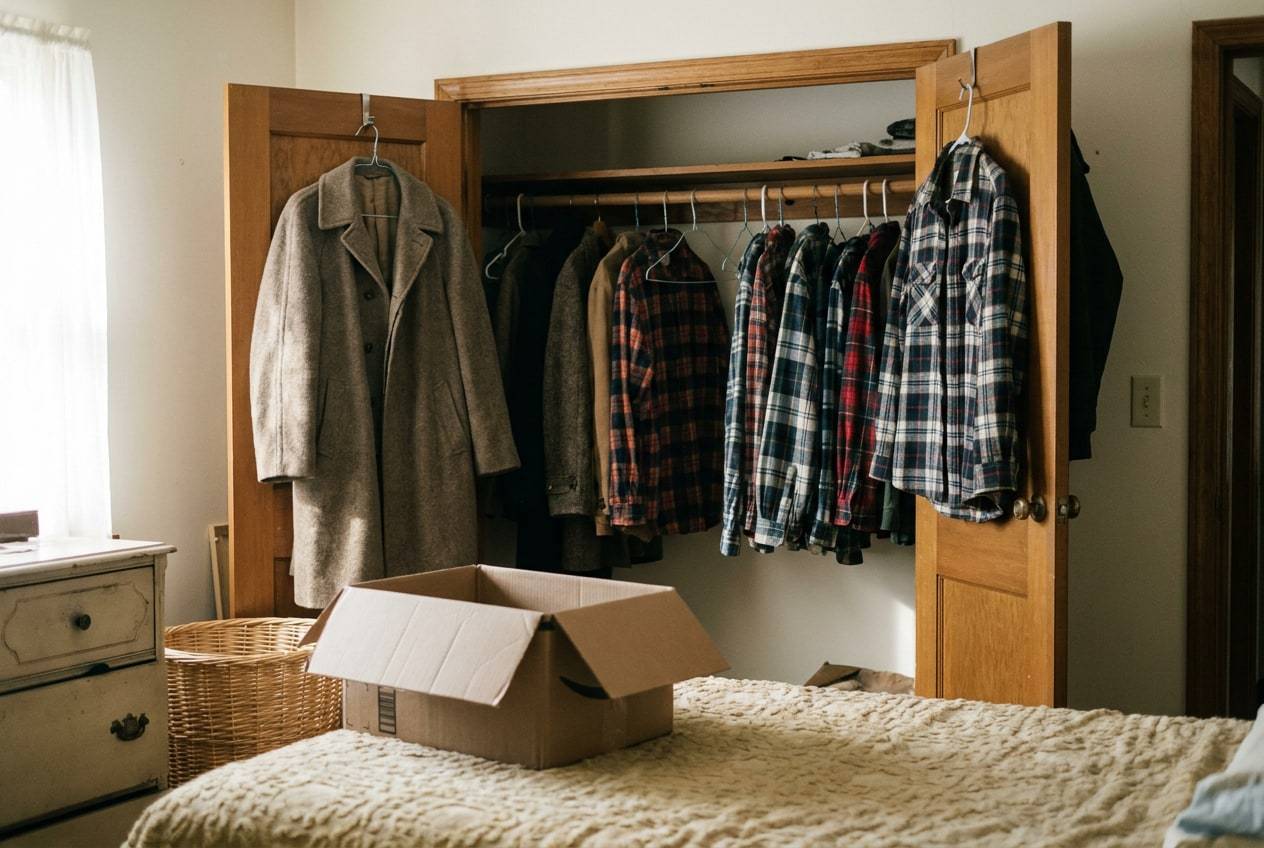
Your mother's or father's closet is still full, and every time you open it the smell of them comes out with the sleeves. You know the clothes have to go somewhere eventually, but you do not know when to start, what to keep, or where a bag of a late parent's clothing is actually welcome. This guide walks through all of it: timing, how to sort without falling apart, what to set aside for a memory quilt or pillow, and where donations go in the Pittsburgh area.
There Is No Deadline on a Parent's Closet
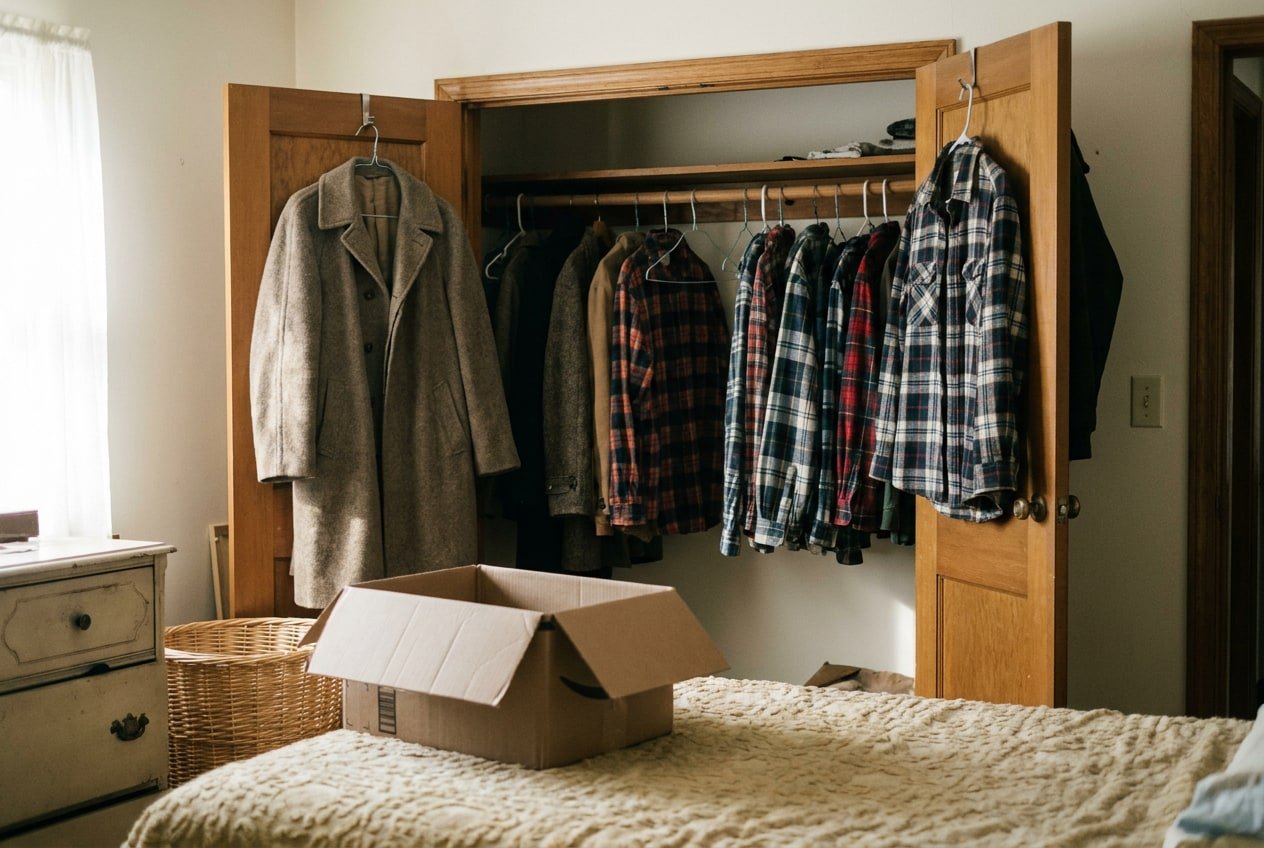
The first thing to know is that the clothes can wait. Unless the house is being sold or the lease on an apartment is ending, nothing forces you to empty a closet in the first week or the first month. Some families do it the day after the funeral because they need something to do with their hands. Others shut the bedroom door for a season and open it when they are ready. Both are normal.
What does create pressure is a house that has to be cleared by a date. If a realtor is coming, if a landlord or senior community needs the unit back, or if the family is driving in from out of state for one weekend, the clothes get folded into that schedule whether you feel ready or not. In that case, give yourself permission to do a fast, imperfect sort and set aside a few boxes of the hardest things to go through later at your own pace.
One honest caution. A closet left untouched in an empty house for a long time attracts moths, mice, and damp, especially in the older homes with stone basements and radiator heat that fill so much of Western Pennsylvania. If the house will sit, at least move the clothes into sealed bins or bags with a few cedar blocks so the choice stays yours.
Check Pockets, Purses, and Coat Linings First
Before a single bag leaves the house, go through every pocket. This is not sentiment. Older parents tuck things away. Coat pockets hold folded cash, a rosary, car keys, hearing aid batteries, and the receipt from the last place they went. Purses hold reading glasses, a wallet with the Medicare card, and sometimes a savings bond or a handwritten list of account numbers.
Pay special attention to the inside of winter coats, the zip compartments of handbags lined up on the closet shelf, shoeboxes at the back, and the pockets of robes and housecoats. Men's suit jackets often have a breast pocket nobody has looked in for years. Dresser drawers under the clothes sometimes hide a jewelry pouch or an envelope of photographs.
Anything you find that looks like a legal or financial document, set aside for the executor. If you are not sure whether something matters for the estate, hold onto it and ask the attorney handling probate rather than guessing.
How to Sort a Deceased Parent's Clothes Without Getting Stuck
Work in short sessions and finish a defined space each time: one dresser, one side of the closet, the coats by the back door. Sorting a whole bedroom in one go sounds efficient and almost never happens, because somewhere around the third drawer you find the cardigan they wore every Christmas and the afternoon stops.
Set up four spots before you begin: keep, give to family, donate, and discard. Use laundry baskets or clearly labeled bags so you are not re-sorting piles later. Decide quickly on the easy things first, which is usually most of the closet: plain socks, underwear, worn-out slippers, the everyday clothes that carry no particular memory. Momentum from the easy items makes the hard ones feel smaller.
Bring someone if you can. A sibling, a cousin, a friend from church, anyone who will hand you a tissue and then hand you the next hanger. If the family is spread across several states, as so many Pittsburgh families are, set up a video call and let the person far away see the closet and weigh in on the few items that matter to them.
Keep a running list of what went where. Who took Dad's watch, which charity got the dresses, what was set aside for a quilt. That record saves hard feelings months later when someone asks about a particular sweater.
- Keep: a few pieces that carry their smell or a specific memory, plus anything you may want for a quilt or pillow.
- Give to family: items a sibling, grandchild, or old friend has asked for or would wear.
- Donate: clean, wearable clothing in good condition, shoes in pairs, coats with working zippers.
- Discard or recycle: stained, torn, or heavily worn items, undergarments, and anything damaged by moths or damp.
What to Keep for Memory Quilts, Pillows, and Bears
A memory quilt is a blanket pieced from squares of a loved one's clothing. A memory pillow is usually a single shirt, often with the buttons and pocket left in place, sewn around a pillow form. Memory bears are small stuffed animals made from one or two garments. All three are made by independent sewers and small quilt shops across the region, and many take commissions from out of town by mail.
Fabric matters more than sentiment when choosing what to set aside. Woven cotton works best: dress shirts, flannel shirts, cotton blouses, denim, chambray, and cotton pajamas. Sweatshirts and T-shirts can be used but need a stabilizer so they do not stretch. Heavy wool, silk, knit sweaters, and stretchy polyester are hard to piece and most quilters will steer you away from them or charge more for the extra work.
Set aside more than you think you need. A lap-sized quilt uses a surprising stack of shirts, and a maker will want a range of colors and patterns. Pull out the flannel they wore to rake leaves, the Steelers shirt, the Sunday dress with the tiny flowers, the aprons, the ties. If several children or grandchildren each want something, you may be able to get one quilt and a few pillows or bears out of the same pile.
Do not wash anything you plan to keep for the smell. Seal those items in a zip bag or a clean bin and they will hold the scent for a long while. Clothes going to a sewer can be washed first, and most makers prefer it. Write the maker a short note about who the person was and which pieces meant the most, so they can put the best fabric where it will be seen.
Where to Donate a Parent's Clothes in the Pittsburgh Area
Most everyday clothing in good condition finds a home easily. Around Pittsburgh, Cranberry, Butler, and Beaver County, the usual options are the large charity thrift stores with donation doors, church and parish clothing closets, shelters for women and families, veterans' organizations that offer scheduled pickups, and programs that provide interview clothing to people returning to work. Each has slightly different needs, and a quick phone call before you load the car saves a wasted trip.
Think about where particular pieces would be most useful. A closet of men's suits, dress shirts, and ties is a gift to a career-closet program. Warm winter coats, boots, hats, and gloves are wanted every fall by shelters and coat drives, and a parent who spent decades of winters here often has a closet full. Gently used scrubs, work boots, and uniforms have their own takers. Formal gowns and furs are harder to place and may do better with a consignment shop or an estate sale.
Donate clean clothes folded or on hangers, not stuffed in trash bags, and separate them from household items. Shoes should be paired and tied together. Ask for a receipt if the estate or a family member will claim a charitable deduction, and confirm the tax details with the executor or the family's accountant rather than assuming.
A few things most donation sites will not take: underwear, socks that have been worn, anything stained or torn, items that smell of smoke or mildew, and clothing that has been stored with mothballs. Those go in the next pile.
What to Do With Clothes That Cannot Be Donated
Worn-out clothing does not have to go straight to the landfill. Many municipalities and some thrift stores in the region accept textiles for recycling even when the items are not wearable, turning them into insulation and industrial rags. Check your township's recycling page or ask at the donation door whether they have a textile bin. Clean cotton T-shirts and flannels also make good shop rags for anyone in the family with a garage.
Heavily damaged items, anything with mold, and old undergarments can simply be bagged and put out with regular trash. Give yourself permission to do this without guilt. A parent would not want you agonizing over a drawer of worn slippers.
If the sorting turns up more than a few carloads, which is common when a parent has lived in the same house for decades and kept every coat since the seventies, it may be worth arranging a single donation pickup or a haul-away so you are not making a dozen trips across the county in a borrowed SUV.
When You Cannot Do the Closet Yourself
Some people genuinely cannot do this part. The grief is too close, or they live too far away, or the house has to be cleared before the next visit home is possible. There is no failure in that. Ask a sibling or trusted friend to do the first pass and set aside anything they think you would want to see. You can make the final call on a short stack rather than a whole room.
If the whole house has to be emptied, not just the closets, the clothes become one piece of a larger job that also includes the basement, the kitchen, the furniture, the paperwork, and the final cleaning before a sale. Homeward Guide Co. exists for exactly that situation. One person sorts with you or for you, keeps the record of what went where, gets the quilt pieces into a labeled bin, drives the donation runs and collects the receipts, and leaves the house broom clean. Families in the Pittsburgh area can reach them at (724) 201-9992 or homewardguideco.com.
Whether you do it alone, with family, or hand it to someone else, remember that the clothes were never the person. Keep the flannel, make the quilt, give the warm coats to someone who will wear them this winter, and let the rest go.
Common questions
- How soon after a death should you get rid of a parent's clothes?
- There is no right timeline. Sort when you are ready unless the house must be sold or returned by a certain date. If the clothes will sit in an empty house for months, seal them in bins or bags with cedar so moths and damp do not make the decision for you.
- What clothes work best for a memory quilt?
- Woven cotton is easiest: dress shirts, flannel, denim, cotton blouses, and pajamas. T-shirts and sweatshirts can be used with a stabilizer. Avoid heavy wool, silk, and stretchy knits unless the maker says otherwise, and set aside more garments than you think you need.
- Where can I donate a deceased parent's clothes near Pittsburgh?
- Charity thrift stores, church clothing closets, family and women's shelters, veterans' organizations with scheduled pickups, and career-closet programs all accept clean, wearable clothing. Call ahead to confirm what they need right now, especially for coats and formal wear.
- Should I wash my parent's clothes before donating or keeping them?
- Wash anything headed for donation or to a quilt maker. Do not wash the few pieces you are keeping for their scent; seal those in a zip bag or clean bin and the smell will last a long time.
- What do I do with clothes that are too worn to donate?
- Check whether your township or a nearby thrift store has a textile recycling bin, which accepts items that are not wearable. Clean cotton makes good rags. Anything moldy or stained can go in the regular trash without guilt.