Downsizing a home you have lived in for decades is not a packing problem. It is a decision problem. Most families stall not because the work is heavy, but because every object asks a question. This checklist breaks the house into manageable passes so the decisions come in a sensible order.
Before you touch a single box
Start with the destination, not the house. Get the floor plan or measurements of the new home first. Knowing that the new living room fits one sofa and two chairs answers a hundred downstream questions before they are asked.
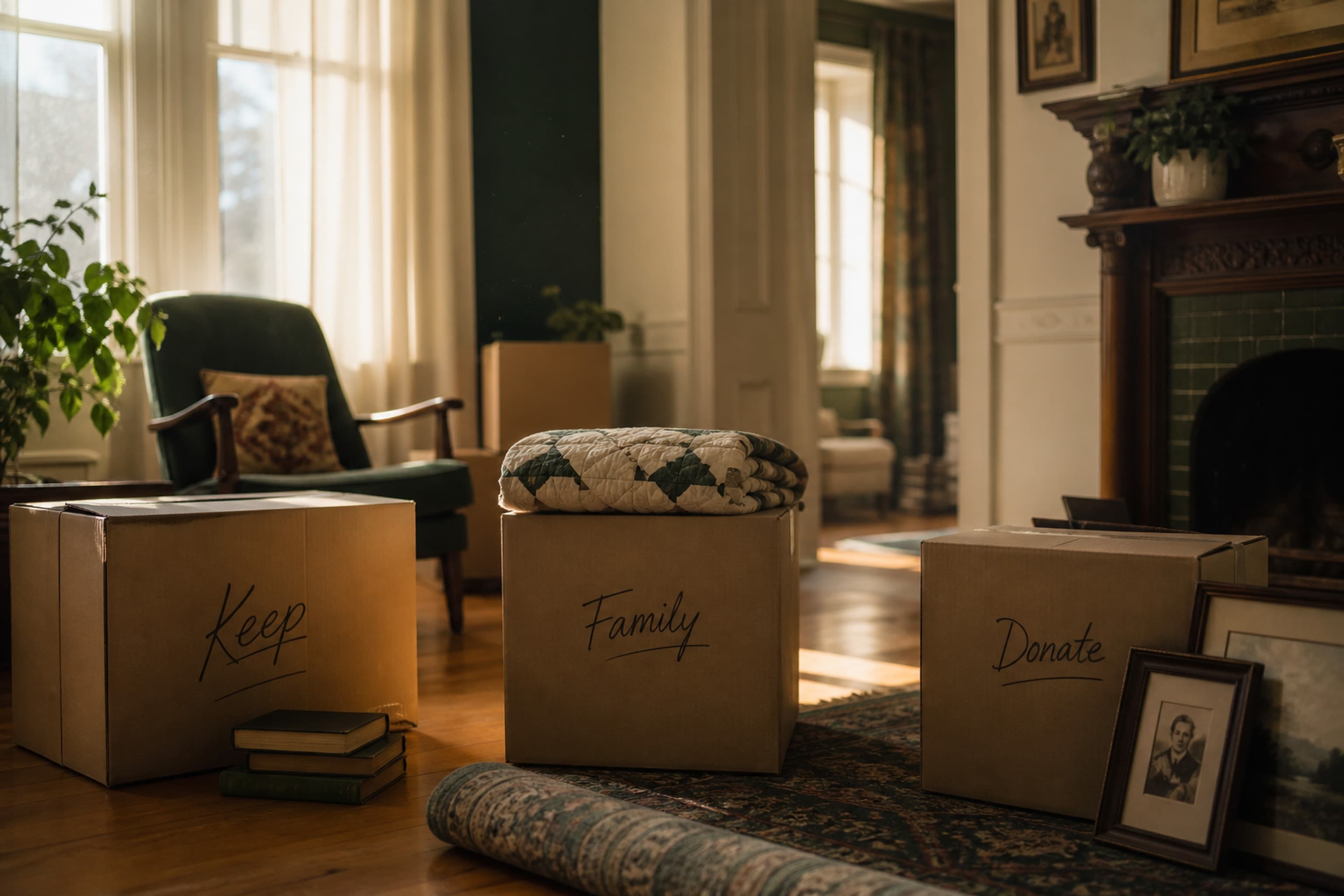
Then agree on a decision language everyone will use. We use six words on every project, and they work for families too:
- Keep: moves to the new home
- Family: goes to a specific relative, named now
- Sell: worth selling, and someone owns doing it
- Donate: useful to someone else
- Remove: disposal or recycling
- Unsure: allowed, but it gets a revisit date
Pass one: the easy rooms
Begin in the rooms with the fewest memories: bathrooms, linen closets, the laundry room, the pantry. These rooms build momentum and teach the family how to decide together before the hard rooms test that skill.
Expired medications, duplicate linens, and appliances that have not run in years leave first. Most families clear these rooms in a single afternoon and feel the difference immediately.
Pass two: the working rooms
Kitchen, garage, basement, and home office. These rooms hold volume rather than memory, and the deciding is mostly practical: what does the new home have room and use for?
A kitchen that cooked for six needs a fraction of itself to cook for one or two. Keep the pieces that get weekly use. In Western Pennsylvania, basements and attics deserve their own scheduled days; a full basement in a longtime home routinely holds more than the entire upstairs.
Pass three: the memory rooms
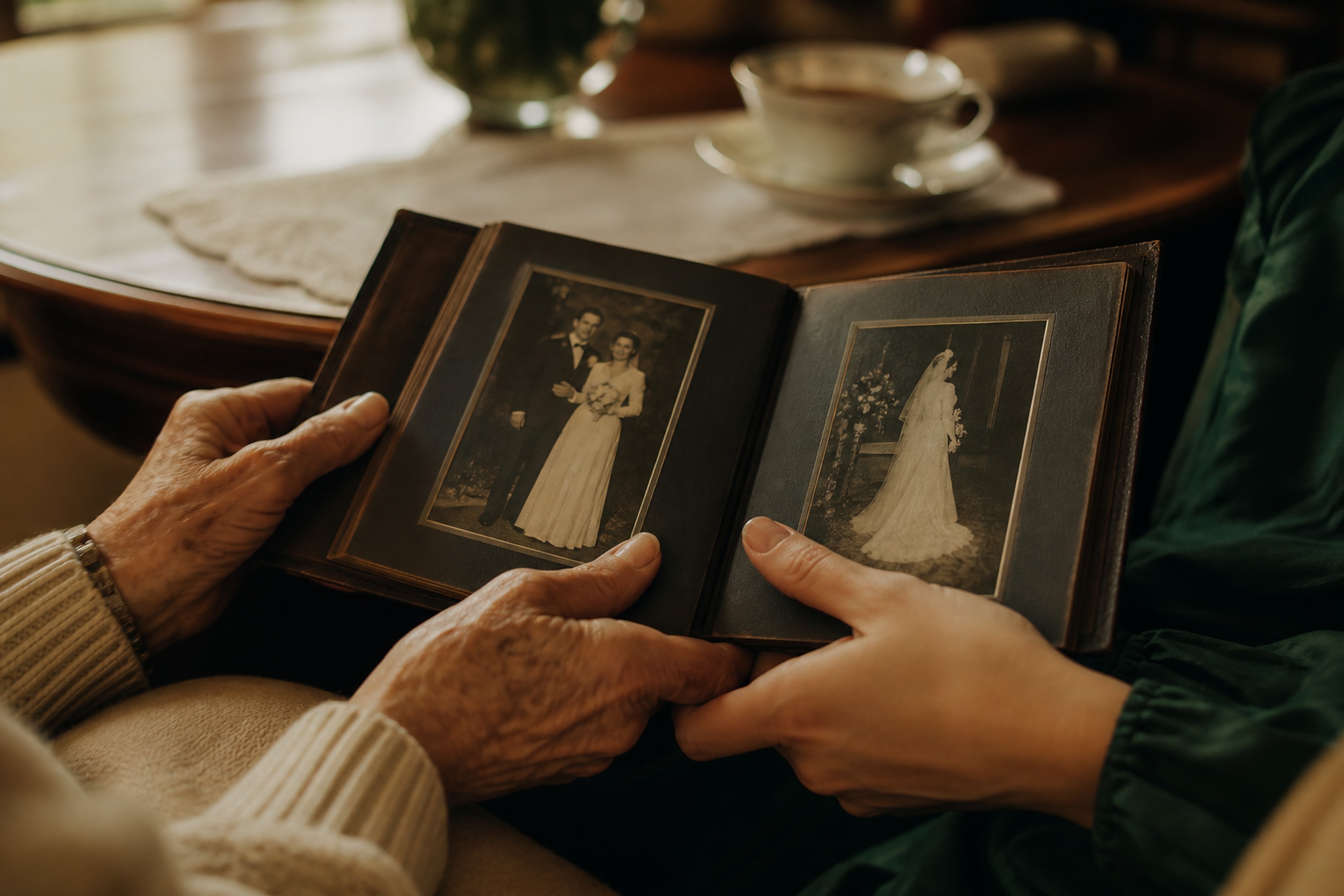
Bedrooms, the living room, photo collections, and anything that belonged to someone who is gone. Do these last, when the family has practice and trust in the process.
Two rules help here. First, honor the person, not the object: one meaningful piece often carries the memory better than twelve boxes. Second, photographs of things count. A photo of the workbench where Dad built things preserves the memory without moving the workbench.
When to bring in help
Families usually call us at one of three moments: when a move date is set and the calendar suddenly becomes real, when siblings are spread across the country and coordination keeps breaking down, or when the volume is simply beyond what evenings and weekends can absorb.
If that is where you are, our preliminary estimate takes a few minutes and gives you an honest planning range before anyone visits.